Experiences to discover Anicinabe culture: Indigenous tourism in Abitibi-Témiscamingue:
May 14, 2026

Long before roads and towns existed, the Anicinabek people were already traveling through and living in the Abitibi-Témiscamingue region.
The Timiskaming and Abitibiwinni nations lived there, interacted, and shared their knowledge: hunting techniques, knowledge of medicinal plants, spiritual traditions, and, let’s face it, a few good tips for surviving the winter.
When the first French Canadians arrived in the region, it was the Indigenous peoples who guided them through the vast boreal forests and helped them settle into this territory, as magnificent as it was demanding.
Over time, these encounters and exchanges have shaped the region’s identity. Cultures have come together, influenced one another, and left a lasting mark on what we now call the Temiscabitibian spirit.
Even today, these stories continue to be passed down. And the best way to discover them is often to meet the people who keep them alive. Here are a few Indigenous tourism experiences in Abitibi-Témiscamingue that offer a deeper understanding of the region and the cultures that have inhabited it for millennia.


Anisipi – Discovering Water
The Anisipi Water Discovery Trail is an immersive experience that invites you to explore the region through the eyes of the Anishinaabe.
This illuminated and interactive trail features three main stops: The Shelter, The Well, and The Tipi. Three different experiences, each as fascinating as the next.
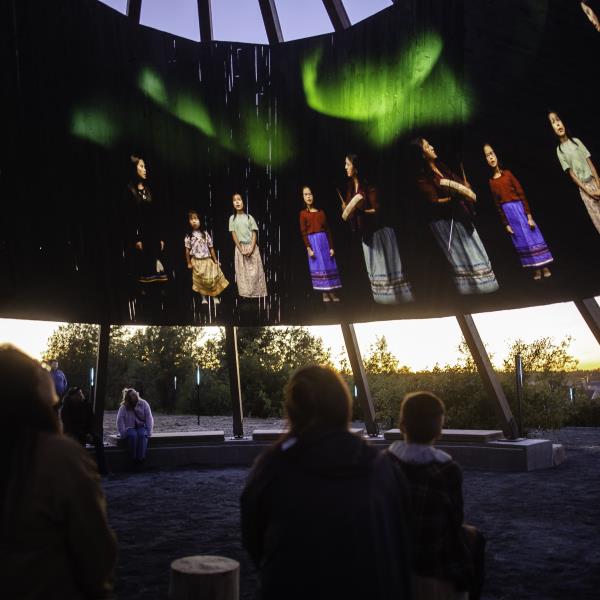
The impressive teepee is set up in the Pikogan community. This installation is the result of a collaboration between Tourisme Amos-Harricana, the Abitibiwinni community of Pikogan, and the creative studio Moment Factory.
Inside the teepee, video projections, sounds, and lighting effects bring the stories of community members to life. Sitting in the circle, you listen to their worldview: a universe where animals are considered brothers, where humans occupy a humble place, and where nature’s fragile balance must be respected.
You’ll also discover the importance of Nanika—now known as the Harricana River—which has guided travel through this territory for generations.
In short, an immersive experience that lets you discover the region through a perspective deeply rooted in the land.


Obadjiwan-Fort-Témiscamingue
If you want to go even further back in time, head to the Obadjiwan-Fort-Témiscamingue National Historic Site.
In 1720, the authorities of New France authorized the establishment of a trading post at this strategic location. For nearly two centuries, the site became an important hub of trade and commercial rivalry among fur traders.
But the history of this place doesn’t begin there. In fact, it is estimated that Indigenous peoples have inhabited this land for nearly 6,000 years.
With the help of a guide, you can explore this historic site and immerse yourself in the different eras that have shaped the region.
In the summer, you might even run into Karl Chevrier, who teaches traditional bark canoe building on-site, following ancestral methods. A fascinating demonstration of a craft passed down through generations.


Abitibiwinni — The Algonquin Experience
To better understand the history and culture of the Abitibiwinni, a visit to the Pikogan community is a must.
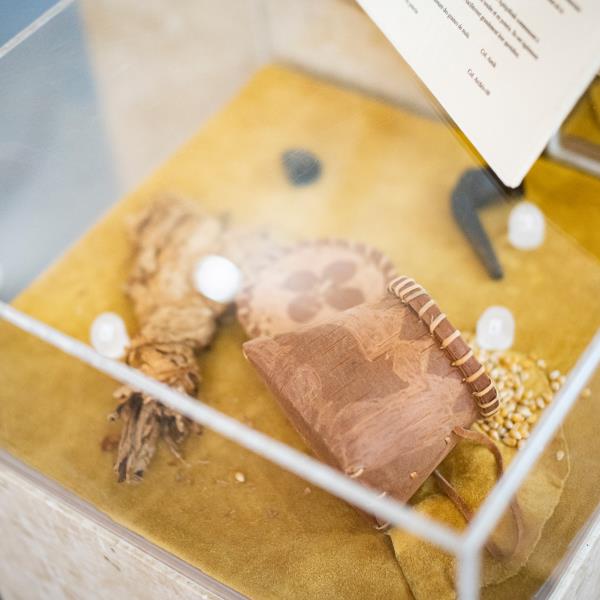
There, an exhibition explores how knowledge, traditions, and a deep connection to the land are passed down within Algonquin communities.
Here, you’ll learn how these peoples have inhabited this vast territory for thousands of years and how their presence has left a lasting mark on the landscape and regional culture.
Two stops are particularly worth a visit:
-
the Pikogan Church, whose architecture resembles the shape of a teepee
-
the craft shop, perfect for discovering the talent of the community’s artisans
A wonderful opportunity to learn more while supporting local creativity.

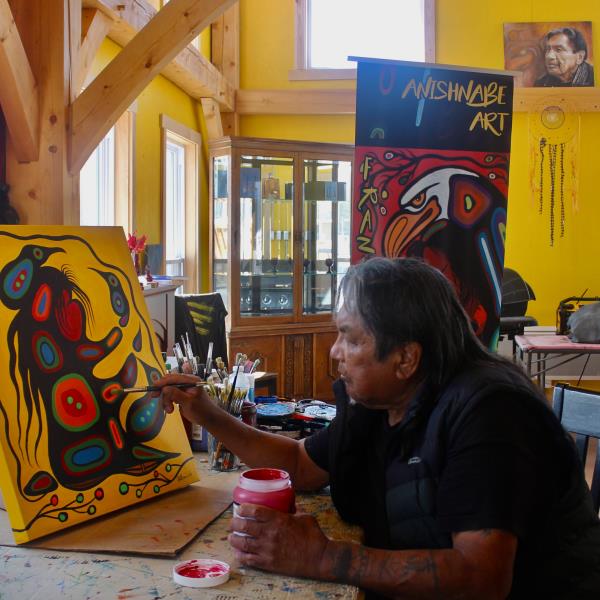
Sky Dreamer Studio — Frank Polson's creative studio
If you’re interested in Indigenous art, you’ll definitely want to check out Frank Polson’s work.
A native of the Long Point First Nation community in Winneway, Témiscamingue, this multidisciplinary artist creates works inspired by the Woodland style. For over 25 years, he has been developing a personal approach that blends tradition and modernity.
Her works are now exhibited throughout Canada and sold all over the world.
And here’s some good news: you can visit Sky Dreamer Studio, his creative workshop, by appointment. The experience takes place in small groups in an intimate setting, allowing you to speak directly with the artist about his creative process and inspiration.
To schedule a visit: 819-722-2054.


The Abitibi-Témiscamingue Pow Wow Trail
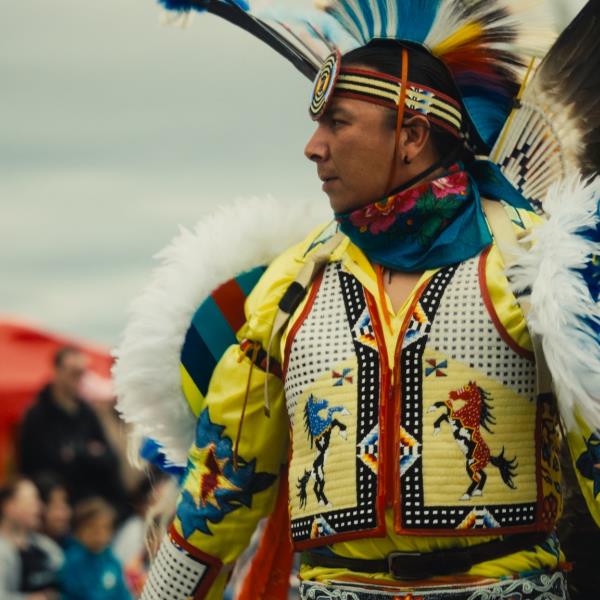
It’s impossible to talk about Indigenous tourism without mentioning Pow Wows, these grand cultural celebrations that bring communities together.
PowWows are both festive and spiritual events where you can witness:
-
traditional dances
-
songs accompanied by drums
-
sometimes dance competitions
-
cultural ceremonies
Everyone is welcome to attend these gatherings.
Some dates to note:
-
Abitibiwinni Pow Wow in Pikogan — June 6 and 7, 2026
- Timiskaming First Nation Pow Wow in Notre-Dame-du-Nord — August 8 and 9, 2026
-
Lac-Simon Pow Wow — coming soon
A powerful and often deeply moving cultural experience.
Mama8i Nikamo Festival
Among the notable new developments is the launch of the Mama8i Nikamo Festival.
In Anicinabemowin, Mama8i Nikamo means “let’s sing together,” and that is exactly the spirit of this event.
Scheduled for June 13 and 14, 2025, this festival is much more than just a music event. It is a vibrant celebration of Indigenous cultures where traditions, contemporary creations, and diverse artistic expressions come together.
Designed as a festive, inclusive, and respectful space, the event is drug- and alcohol-free, aiming to provide a warm and safe atmosphere for everyone.
A visit to Indigenous territory begins with listening and respect. Tourisme Autochtone Québec offers five simple tips for a meaningful and enriching experience. Take your time, stay curious, and let the encounter guide you.
Consulte les conseilsDiscover to better understand
In recent years, there has been much talk of reconciliation among peoples. Part of this journey involves listening, connecting, and sharing knowledge.
Exploring these Indigenous tourism experiences in Abitibi-Témiscamingue is a wonderful way to broaden your horizons and gain a deeper understanding of the cultures that have shaped this region for millennia.
And who knows, these encounters might just change the way you see the region.